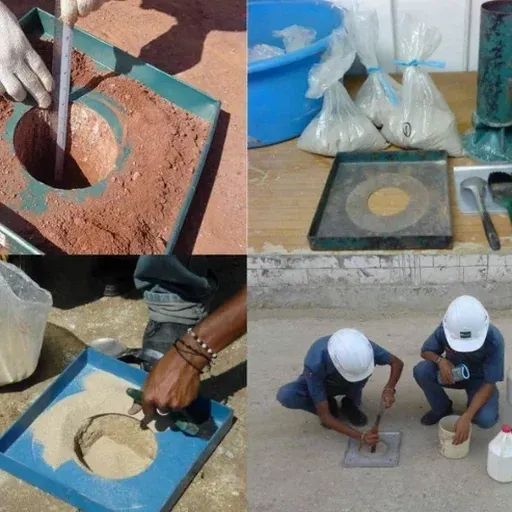
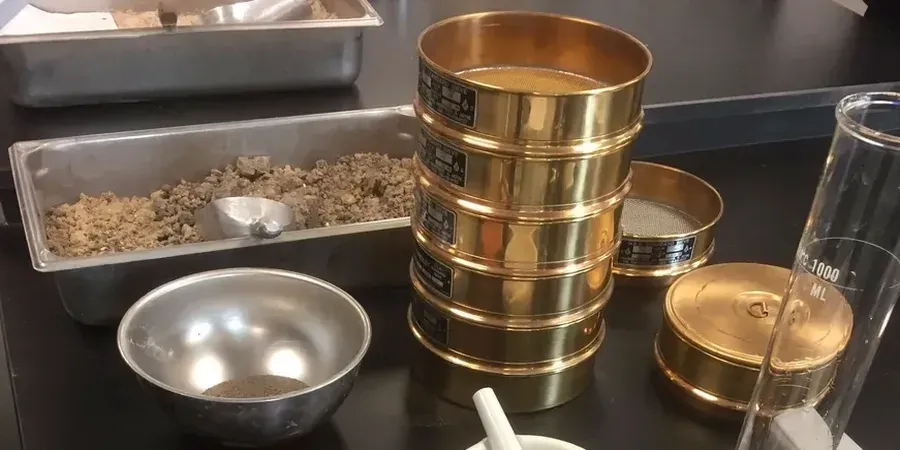
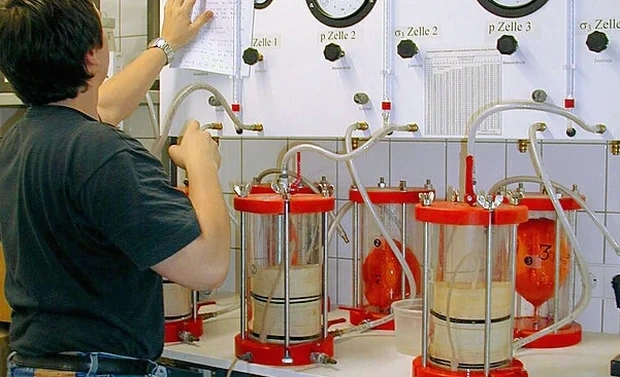
The loading press sits inside a temperature-controlled chamber. A cylindrical plunger descends at a steady 1.27 mm per minute, pushing into a compacted soil specimen. That is the laboratory CBR test in motion. Technicians in Red Deer rely on this setup to measure how much pressure a subgrade or base material can take before it deforms. The reading comes from a calibrated proving ring and a dial gauge tracking penetration. Every data point feeds directly into pavement thickness calculations. For a city that handles freeze-thaw cycles and heavy truck traffic along the QEII corridor, knowing the soaked CBR value is not optional. It determines whether a parking lot survives its first spring or turns into a maintenance headache. Before a single grader moves on site, the grain-size analysis and the compaction curve are already on the bench, setting the stage for the CBR specimen preparation.
A soaked CBR below 3 percent in Red Deer's glaciolacustrine clays means pavement failure is not a question of if, but when.